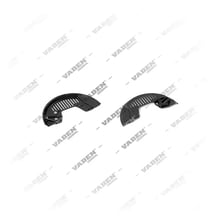
What Is a Brake Dust Cover?
A brake dust cover is a protective metal shield fitted between the brake disc and the surrounding chassis components on heavy commercial vehicles. It keeps dust, water, mud, stones and other road debris away from the brake disc and pads, preventing premature wear and damage to the braking system. It also helps contain the fine dust particles generated as brake pads wear down, keeping the brake assembly cleaner and reducing particle release into the environment. Also referred to as a brake dust shield or disc backing plate, this part is a standard fitment across heavy commercial vehicles from Mercedes-Benz, MAN, Scania, Volvo, DAF, Iveco, Renault, BMC and Ford.
Function and Benefits of a Brake Dust Cover
- Protects the Brake Disc and Pads: Blocks dust, water, mud, stones and other debris from reaching the braking system, helping the disc and pads perform efficiently for longer.
- Limits Brake Dust Release: Contains the fine particles generated by pad wear, reducing the amount of brake dust released into the surrounding environment.
- Supports Brake Cooling: Helps direct airflow around the disc, contributing to faster cooling after the high temperatures generated during heavy braking.
- Improves Braking Performance: Helps balance heat distribution across the disc, supporting faster brake response and more stable stopping power under heavy loads.
- Extends Component Life: Shields the disc and pads from accelerated wear, lowering long-term maintenance and replacement costs.
Brake Dust Cover Technical Specifications
| Specification | Description |
|---|
| Part Name | Brake Dust Cover (Brake Dust Shield) |
| Application | Heavy-duty trucks, trailers, buses and tractor units |
| System | Braking System |
| Main Function | Shields the brake disc and pads from road debris |
| Material | Stainless steel or high-temperature-resistant steel/alloy |
| Position | Mounted on the axle side, at a set clearance from the brake disc |
| Fitting Method | Bolted / screw-mounted |
| Compatible OE Brands | Mercedes-Benz, MAN, Scania, Volvo, DAF, Iveco, Renault, BMC, Ford |
| Product Range | 99 different references |
Types of Brake Dust Covers
- Front Axle Dust Cover: Shields the front brake discs, which take the brunt of road spray, debris and steering-axle exposure.
- Rear Axle Dust Cover: Designed for rear brake discs, which see heavy heat build-up on loaded commercial vehicles.
- Left and Right Dust Covers: Manufactured as mirrored, side-specific parts to match the left- and right-hand wheel assemblies.
- Stainless Steel Dust Cover: Offers strong corrosion resistance against moisture and road salt for extended service life.
- High-Temperature Dust Cover: Made from an alloy engineered to withstand the heat generated during sustained or heavy-duty braking.
Brake Dust Cover Maintenance and Installation
- Inspect Regularly: Check the dust cover at every brake service; replace it immediately if it shows bending, cracking or corrosion.
- Choose Durable Materials: Opt for stainless steel or high-temperature alloy covers for the longest service life.
- Fit at the Correct Clearance: The cover must sit at the proper distance from the brake disc and be securely fastened; loose mounting causes noise and vibration.
- Clean Regularly: After winter driving on salted roads, clear away dirt, mud and dust buildup to reduce the risk of corrosion.
- Use Qualified Technicians: Removal and refitting should be carried out by trained technicians as part of full brake system service.
Common Brake Dust Cover Faults and Fixes
- Bent or Cracked Cover: Impacts or poor road conditions can deform the cover, leading to uneven braking and noise. Fix: Replace the damaged cover promptly.
- Rust and Corrosion: Constant exposure to moisture and salted winter roads causes the cover to rust over time. Fix: Fit a coated, stainless or otherwise high-quality corrosion-resistant cover.
- Loose Mounting and Rattling: Loose mounting bolts produce a metallic rattle or vibration during braking. Fix: Check and re-torque the mounting points regularly.
- Rubbing Against the Disc: A misaligned cover contacts the brake disc, causing a metallic scraping noise. Fix: Reposition the cover to the correct clearance from the disc.
Why Choose VADEN ORIGINAL Brake Dust Covers?
- Durable Materials: Corrosion- and heat-resistant construction delivers long-lasting performance in demanding conditions.
- OEM Standards: Manufactured to original equipment specifications for precise fit and dimensional accuracy.
- Wide Product Range: 99 references covering Mercedes-Benz, MAN, Scania, Volvo, DAF, Iveco, Renault, BMC and Ford applications.
- Driving Safety: Protects the brake disc to support stable, dependable stopping power.
- Technical Support: Expert guidance is available for choosing the right part and correct fitment.
Frequently Asked Questions (FAQ)
What does a brake dust cover do?
A brake dust cover shields the brake disc and pads from dust, water, mud and stones, reducing wear and extending the life of the braking system. It also helps contain the fine dust generated as brake pads wear.
Can you drive without a brake dust cover?
Technically a vehicle can be driven for a short time without one, but the disc and pads are then directly exposed to dust, water and mud. This accelerates wear, promotes corrosion and can reduce braking performance, so fitting the cover is strongly recommended for safe, long-term use.
Why is my brake dust cover making noise?
A rattling or scraping noise usually means the cover has come loose, bent, corroded, or is rubbing against the brake disc. Check the mounting position, tighten the fasteners, and replace the cover if it is damaged.
How do you replace a brake dust cover?
The wheel and, if needed, the brake disc are removed to access the dust cover, which is then unbolted and replaced with a new one set at the correct clearance from the disc. This job is best left to a qualified brake technician.
What material is a brake dust cover made from?
Quality brake dust covers are typically made from stainless steel or high-temperature-resistant steel and alloys, which resist corrosion and deformation from moisture, road salt and braking heat.
Which vehicles use this brake dust cover?
Brake dust covers are fitted across heavy commercial vehicles, including trucks, trailers, tractor units and buses from Mercedes-Benz, MAN, Scania, Volvo, DAF, Iveco, Renault, BMC and Ford. Always match the reference to the vehicle's make, model and axle position.
Conclusion
Protecting the braking system is essential to safe operation of heavy commercial vehicles. The brake dust cover shields the disc and pads from dust, water and mud, extends component life, limits the release of brake dust into the environment, and helps keep maintenance costs down by slowing wear. Regular inspection and choosing quality materials are key to a durable, reliable braking system. Choose VADEN ORIGINAL brake dust covers for safer, longer-lasting braking performance.
Related technical guide: Brake Dust Shield · Download PDF
Related technical guide: Brake Dust Shield: Faults, Replacement & Maintenance Guide