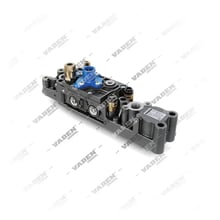
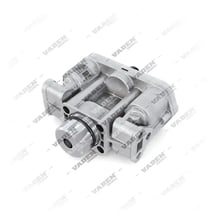
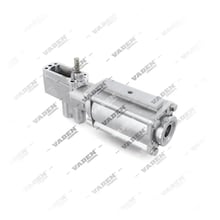
What Is a Range Change Valve (Splitter Valve)?
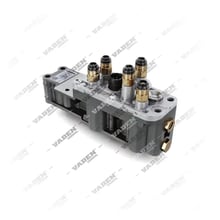
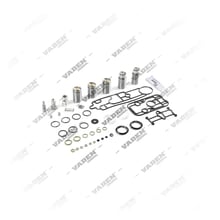
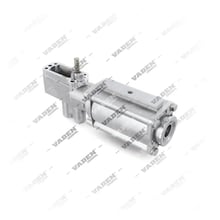
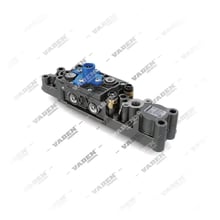
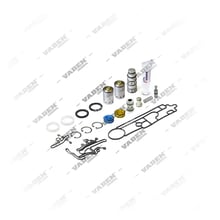
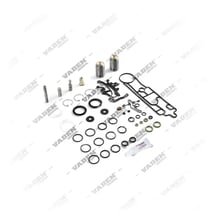
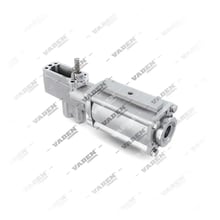
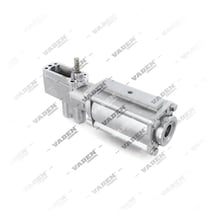
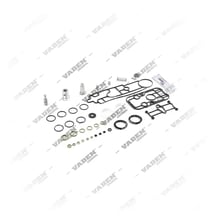
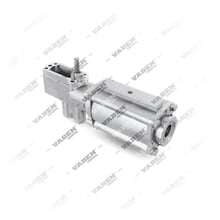
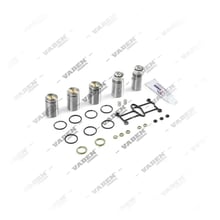
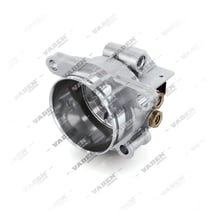
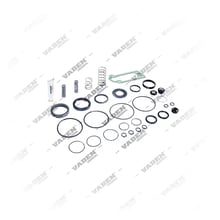
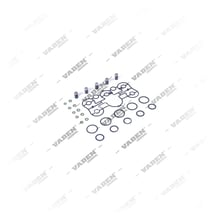
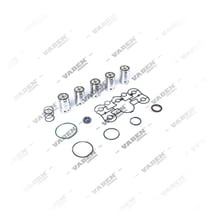
The range change valve, also known in the industry as a splitter valve or range valve, is the control component that pneumatically operates the range or splitter group shift in the multi-stage gear groups of heavy commercial vehicle transmissions. In 9, 12, or 16-forward-speed transmissions, there is an additional "low/high range" group alongside the main group; the part that shifts this additional group is the range change valve. This category lists both the unit itself and the repair kit made up of its internal sealing elements.
The range-change switch on the gear lever transmits the selected range as a signal to the unit's spool; the spool then directs compressed air to the correct side of the range cylinder. When the unit fails, gear shifts become difficult and some gears cannot be engaged; this affects driving safety.
How Does the Range Change Valve Work?
- Receiving the signal: The range-change switch transmits the selected range as an electrical signal.
- Spool positioning: The spool inside the unit opens one of the air channels according to the incoming signal.
- Air routing: Compressed air is sent through the open channel to the range-shift cylinder.
- Group shifting: As the cylinder piston moves, the shift fork engages, selecting the low or high range.
Functions of the Range Change Valve
- Range/group selection: Shifts the transmission's gear groups according to driver demand.
- Air flow management: Delivers compressed air to the correct cylinder at the correct time.
- System protection: Prevents mistimed shifts, protecting the transmission's internal gears from strain.
General Failure Symptoms
- Failure to engage gear: Because the range group does not shift, some gears cannot be engaged, or the gear lever stays in neutral.
- Delayed or harsh shifting: Insufficient air pressure delays or stiffens the range shift.
- Continuous air leak noise: A hissing sound from the unit housing indicates that the internal seals have failed.
- Random range shifting: The range changing on its own indicates a spool or electronic fault.
If there is only an air leak, the repair kit is sufficient; if there is a spool or housing fault, the complete unit must be replaced.
Range Change Valve Technical Specifications
Range change valve (splitter valve) general technical data| Specification | Description |
|---|
| Operating principle | Electro-pneumatic spool valve |
| Supply voltage | 12 V or 24 V, depending on the vehicle electrical system |
| Application | Heavy commercial vehicles with multi-stage manual/semi-automatic transmissions |
| Compatibility criterion | OE number and transmission model/type code |
Unit or Repair Kit?
- Range Change Valve (complete unit): If there is a crack in the housing, wear on the spool, or a fault in the electrical connection, the entire unit is replaced.
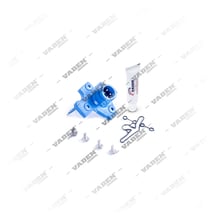
- Range Change Valve Repair Kit: If the housing and spool are sound and only sealing elements such as o-rings or seals show wear, the repair kit is used.
The correct reference should be based on the OE number from the transmission manufacturer (ZF, Eaton, Mercedes-Benz, MAN, Scania, Volvo, DAF, Iveco); units that look identical may differ in port count and connector type.
Maintenance and Points to Note
- Air quality: Moisture and oil in the system erode the spool surfaces; it is important that the dryer unit works properly.
- Electrical connection: Corrosion at the connector causes faulty signals and should be checked periodically.
- Correct torque: Mounting screws should be tightened to the specified value; over-tightening can crack the housing.
Torque and pressure values vary by model; for exact values, the vehicle's current OE service manual is authoritative.
Frequently Asked Questions (FAQ)
What does the range change valve (splitter valve) do?
Based on the signal from the range-change switch on the gear lever, it directs compressed air to the range cylinder in the transmission, enabling shifts between the low and high gear groups.
What happens when the range change valve fails?
Some gears cannot be engaged, shifts become delayed or harsh, or the range may change on its own. These symptoms affect driving safety.
Should I buy the unit or the repair kit?
If only the sealing elements are worn, the repair kit is sufficient. If there is a fault in the housing or spool, the complete unit must be replaced.
In which transmissions is the range change valve used?
It is used in heavy commercial vehicles with multi-stage manual and semi-automatic transmissions that include a range or splitter group.
How do I choose the correct product?
Reference the transmission manufacturer's OE number together with the chassis number, and compare port count and connector type.
Related technical guide: Heavy-Duty Truck Gearbox: Faults, Replacement & Maintenance