What Is a Wheel Hub Repair Kit?
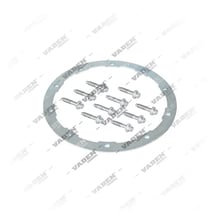
A wheel hub repair kit is a service kit that packages the single-use sealing and locking components together with the bearing set in one package for the disassembly and reassembly of the wheel hub. The hub body itself usually remains reusable; the parts that actually wear out are the bearing races, the seal lip, the locking elements and the contaminated grease.
The hub is a junction point that carries the vehicle's static load, cornering forces and braking torque at the same time. For this reason, renewing the complete kit every time the hub is opened is both safer and more economical in the long run than trying to salvage individual parts one by one.
What Is Included in the Repair Kit?
- Bearing set: The tapered roller bearings that form the inner and outer races of the hub, supplied together with their outer cups as a single set.
- Hub seal: The component that keeps grease from leaking out and water and dust from getting in; it can be a classic lip-type seal or a one-piece cassette-type seal.
- Locking elements: The hub nut, lock washer, locking plate and safety pin that fix the preload in place; most of these are single-use parts.
- Adjustment shims and circlips: The shims that set the axial position of the bearings, and the retaining elements that hold the hub cap in place.
- Gasket and grease: The gasket set for the cap and the inspection plug, along with a high-temperature lubricant suitable for the bearing class.
Technical Specifications
| Feature | Description |
|---|
| Product Group | Wheel Hub Repair Kit (Hub Overhaul Set) |
| Parent System | Axle and Wheel Assembly - Wheel Hub |
| Application | Truck, tractor unit, bus and trailer axles |
| Kit Contents | Bearing set, seal, locking plate and washer, nut, gasket, grease |
| Bearing Type | Tapered roller double bearing or cassette-type unit |
| Sealing | Lip-type oil seal or one-piece cassette seal |
| Compatible Brands | Mercedes-Benz, MAN, Scania, Volvo, DAF, Iveco, Renault, BMC, Ford |
| Standard | Compliant with OEM standards; verified by OE number |
Under Which Symptoms Should the Repair Kit Be Renewed?
- Play in the hub: Movement felt when the wheel is lifted and forced at the top and bottom points shows that the preload has been lost.
- Humming noise: A noise that rises with speed and changes in corners is a typical sign of bearing damage.
- Overheating: A hub too hot to touch by hand when the vehicle is standing points to insufficient grease, incorrect preload or a seized bearing.
- Seal leakage: Grease traces on the inner rim surface, on the brake pad or around the brake drum also put braking performance at risk.
- Uneven wear: Hub play disturbs the wheel plane, causing one-sided tire wear and vibration.
- ABS warning: Play can change the distance between the sensor and the tone ring, causing an irregular signal.
Components That Must Always Be Renewed During Disassembly
The kit exists because some parts inside the hub are single-use by design; looking intact does not mean they can be reused.
- Seal: Disassembly distorts the lip geometry and the seal has already worn into its running track; if refitted, it will start leaking again within a short time.
- Locking plate, washer and safety pin: Once bent, the material fatigues, and the nut may loosen on a second use.
- Single-use nuts and bolts: Elements tightened by the torque-and-angle method are permanently stretched and cannot be reused.
- Bearing and its cup: Fitting a new bearing onto an old cup leads to premature failure because of the pre-formed wear track.
- Grease: Old grease carries metal particles and moisture; the hub must be cleaned and refilled with fresh grease.
Preload and Adjustment Logic
In tapered roller hub bearings, the bearings must be neither completely loose nor seized. A loose setting causes play and shock loading in the hub; an overly tight setting causes friction heat, breakdown of the grease and rapid bearing seizure.
The procedure generally consists of tightening the nut enough to seat the bearings, rotating the hub so the surfaces settle, then loosening the nut and bringing it to its final position before bending the locking element. Tightening torque, loosening angle and acceptable play vary by axle; exact values follow the vehicle's current OE service manual. Cassette-type hub units require no adjustment.
How to Choose the Right Repair Kit
- Axle type: A driven rear axle, a free-rolling front axle and a trailer axle use different bearing and seal sizes; kits are not interchangeable between them.
- Hub and bearing size: The bearing type number should be compared with the seal's inner diameter, outer diameter and height dimensions.
- OE number: The most reliable way to verify; it also distinguishes between axle variants within the same model.
- ABS ring: In applications where the tone ring is integrated into the seal, the wrong seal can interrupt the ABS signal.
- Kit completeness: VADEN ORIGINAL repair kits are packaged to provide everything needed for a complete hub overhaul.
Post-Replacement Checklist
- Free rotation: The wheel should turn by hand without binding or a stepped feel.
- Play check: No perceptible play should remain under vertical and horizontal force.
- Locking element: Visually confirm that the locking plate is bent correctly and the pin is seated.
- Heat test: After a short test drive, compare the hub temperature with the opposite wheel.
- Leak check: Inspect the area around the seal, the cap gasket and the plug for grease traces.
- Recheck: Wheel nut torque and hub play should be rechecked after the first few kilometers.
Frequently Asked Questions (FAQ)
What does a wheel hub repair kit include?
The kit includes the hub's inner and outer tapered roller bearings together with their cups, the hub seal, the hub nut, the locking plate and washer, adjustment shims, the cap gasket and, in most applications, grease of the appropriate class. Scope varies by axle type and should be verified with the OE number.
Under which symptoms should a wheel hub repair kit be replaced?
Play felt in the hub, a humming noise that rises with speed or changes in corners, overheating, seal leakage that leaves grease traces on the inner rim surface, one-sided tire wear, and an irregular ABS signal all show that the kit needs renewing.
Can I replace only the bearing and keep using the old seal and locking plate?
No. The seal lip loses its geometry during disassembly and has already worn into its running track; the locking plate and washer fatigue once bent and can no longer lock the nut securely. These components are single-use.
How is wheel hub bearing preload adjusted?
The bearings should be neither loose nor seized. The nut is tightened enough to seat the bearings, the hub is rotated so the surfaces settle, then the nut is loosened and locked in its final position. Because torque, loosening angle and play vary by axle, the vehicle's current OE service manual is the reference.
How do I choose the right wheel hub repair kit?
First determine the axle type; a driven rear axle, a free-rolling front axle and a trailer axle use different sizes. Compare the bearing type number and seal dimensions, check whether the ABS ring is integrated into the seal, and verify the choice with the OE number.
Frequently Asked Questions (FAQ)
What does a wheel hub repair kit include?
The kit includes the hub's inner and outer tapered roller bearings together with their cups, the hub seal, the hub nut, the locking plate and washer, adjustment shims, the cap gasket and, in most applications, grease of the appropriate class. Scope varies by axle type and should be verified with the OE number.
Under which symptoms should a wheel hub repair kit be replaced?
Play felt in the hub, a humming noise that rises with speed or changes in corners, overheating, seal leakage that leaves grease traces on the inner rim surface, one-sided tire wear, and an irregular ABS signal all show that the kit needs renewing.
Can I replace only the bearing and keep using the old seal and locking plate?
No. The seal lip loses its geometry during disassembly and has already worn into its running track; the locking plate and washer fatigue once bent and can no longer lock the nut securely. These components are single-use.
How is wheel hub bearing preload adjusted?
The bearings should be neither loose nor seized. The nut is tightened enough to seat the bearings, the hub is rotated so the surfaces settle, then the nut is loosened and locked in its final position. Because torque, loosening angle and play vary by axle, the vehicle's current OE service manual is the reference.
How do I choose the right wheel hub repair kit?
First determine the axle type; a driven rear axle, a free-rolling front axle and a trailer axle use different sizes. Compare the bearing type number and seal dimensions, check whether the ABS ring is integrated into the seal, and verify the choice with the OE number.
Related technical guide: Truck Wheel Hub: Faults, Replacement and Maintenance Guide